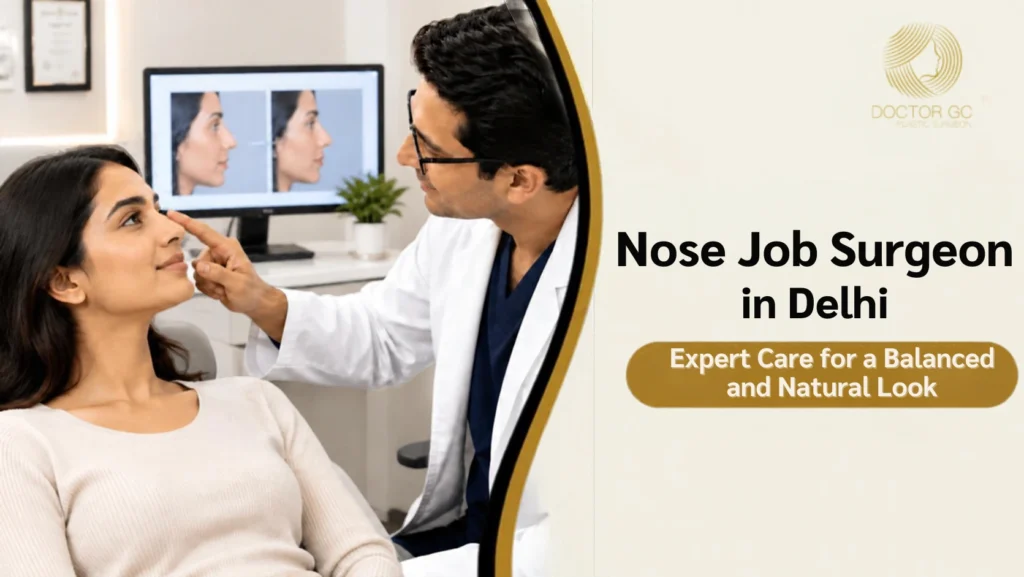
Choosing a nose job surgeon in Delhi is an important decision if you want to change the shape of your nose, improve nasal breathing, or address both concerns. A nose job, medically known as rhinoplasty, requires careful planning based on your nasal structure, facial proportions, skin characteristics, and individual goals.
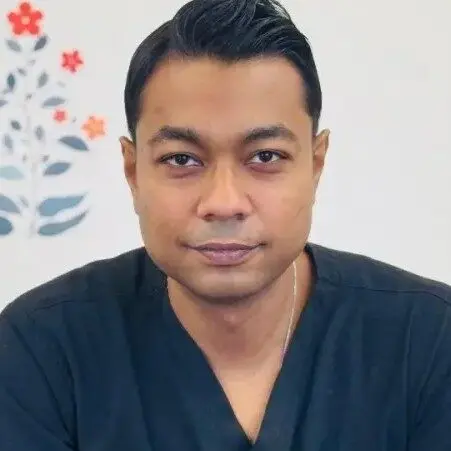
The aim is to determine which changes are appropriate while maintaining or improving nasal function. Dr. Gautam Chaudhury, a Plastic Surgeon in Delhi, evaluates these factors when planning treatment. Understanding the surgeon’s qualifications, approach to nasal structure, and ability to explain realistic outcomes can help you make an informed decision. If you are considering rhinoplasty surgery in Delhi, a consultation can help you understand the available options, the surgical approach that may suit your needs, and the expected recovery process.
Why a plastic surgeon is the right nose surgeon in Delhi?
A nose job is a facial operation as much as a nasal one, because the nose has to suit the face around it. A plastic surgeon trains in reshaping facial tissue and judging proportion, and also in cartilage grafting, skin behaviour and how scars heal, which together decide how a nose settles over the months after surgery.
Many noses have a crooked septum and an unwanted shape together, and fixing one while ignoring the other tends to bring people back for a second operation. As a nose surgeon in Delhi, Dr. Chaudhury holds MBBS, MS and MCh degrees, and when a septum and an outer shape both need work he plans them as one operation.
Plastic surgery training adds four things that matter for a nose job:
- Judging the nose against the chin, lips and forehead
- Grafting cartilage and rebuilding support where the nose has lost it
- Reading how thick or thin skin will heal over the new shape
- Planning the septum and the outer shape as one operation
What a nose job surgeon looks at before planning anything?
Photographs show the outside, but the plan depends on things you cannot see in a mirror.
Skin thickness comes first. Thick, oily skin hides small cartilage changes and holds swelling for longer, so a surgeon who promises a sharp, narrow tip on thick skin is promising something the skin may not allow. The strength of the tip cartilage is next. Weak cartilage can collapse over the years, while strong cartilage can be reshaped with sutures alone.
Then comes the bridge. A hump is sometimes a real excess of bone and cartilage, and sometimes it only looks like one because the root of the nose sits low. The two need opposite treatment. After that, the septum and the nasal valve, which decide whether you can breathe well once the outside has changed.
Last, the rest of the face. A nose that is technically correct can still look wrong beside a receding chin or a prominent forehead, and a good surgeon will tell you that at the first meeting instead of after surgery.
The decisions a nose surgeon in Delhi makes that shape your result
Four decisions carry most of the weight when a nose surgeon in Delhi plans your nose job.
The first is whether to reduce, add or only refine. Many Indian noses have a low bridge and a broad, thick-skinned tip, which means the nose needs structure added, not removed. That structure usually comes from cartilage taken from the septum or the ear. A patient who arrives asking for the nose to be made smaller sometimes needs the opposite.
The choice usually falls into one of three directions:
- Reduce, when there is a real excess of bone or cartilage
- Add, when the bridge or tip lacks support
- Refine, when the structure is sound and only the tip needs reshaping with sutures
The second is how much of a hump to take down. The usual error is taking too much and leaving a nose that looks scooped from the side, so a conservative first cut is safer than a dramatic one.
The third is open or closed access. This depends on how much work the tip needs, not on surgeon preference. A tip that needs grafts and precise suturing is easier to work on with full visibility, while a small bridge adjustment can often be done through the nostrils.
- Open access suits tips that need grafts or precise suturing
- Closed access suits small bridge adjustments with little tip work
The fourth is the septum. If it is deviated, correcting it improves breathing, and the cartilage removed from it often becomes the graft material for the tip, so the same step serves two purposes.
A quick reference for how these decisions usually play out:
| Situation | Usual decision | Reason |
|---|---|---|
| Low bridge with a broad, thick-skinned tip | Add structure with grafts | The nose lacks support, so reducing it would weaken it further |
| Genuine hump of bone and cartilage | Conservative reduction, then reassess | Over-reduction is harder to fix than under-reduction |
| Low root that only looks like a hump | Raise the root, leave the bridge | Removing bone would treat the wrong problem |
| Tip needs grafts or fine suturing | Open access | The surgeon can see and place each graft |
| Deviated septum | Correct it and reuse the cartilage | Improves breathing and supplies graft material |
Cases a nose job surgeon sees most often
Each type of case is planned around a different problem.
| Case | Main planning focus | Common extra step |
|---|---|---|
| First-time cosmetic | Bridge height and tip shape against the face | Cartilage grafts if the tip lacks support |
| Wide or bulbous tip | Tip cartilage and skin thickness | Suture reshaping, sometimes grafts |
| Bent after an injury | Septum and bone position | Septum correction with outer reshaping |
| Breathing only | Septum and nasal valve | No change to the outer shape |
| Revision | Scar tissue, missing cartilage, the earlier operation | Ear or rib cartilage |
The last group has already had a nose job and is not happy with it, and that case is covered next.
Revision: when a previous nose job needs correcting
Revision work is harder than a first operation, which is why patients often look specifically for a nose surgeon in Delhi with revision experience. Scar tissue has replaced the normal planes, the skin may be thinner, and cartilage from the septum has often been used up. In those cases cartilage may have to come from the ear or the rib.
Most surgeons advise waiting about a year after the first operation before planning a revision, because the nose keeps changing for months and a result judged at three months is not a final result. If you are considering a revision, bring your original operation notes and any photographs from before the first surgery. They save time and often explain why the first result went the way it did.
Your consultation with Dr. Chaudhury, nose surgeon in Delhi
A consultation with a nose surgeon in Delhi should be an examination, not a sales conversation. Dr. Chaudhury looks at the nose from the outside and checks the inside, takes photographs from several angles, and asks about breathing, past injuries, earlier nose surgery, smoking and regular medicines such as blood thinners.
Bring photographs of noses you like, and also of noses you do not like. The second set tells him as much as the first. He will then tell you what your skin and cartilage can realistically achieve, and if the nose in your reference photo does not suit your face or your anatomy, he will say so.
Bring these to the first visit:
- Photos of noses you like and noses you do not like
- Photos of your own nose from before any injury or surgery
- Operation notes, if you have had nose surgery before
- A list of regular medicines, including blood thinners and supplements
- Your questions about breathing, written down
The fee depends on whether the operation is a first one or a revision, whether grafts are needed, the anaesthesia, and the hospital stay, so it is only discussed properly after he has examined you. General figures are on our page for Rhinoplasty surgery cost in Delhi.
Setting realistic expectations
The outside swelling settles over the first few weeks, but the tip keeps refining for up to a year, and longer on thick skin. A nose photographed at one month is not the nose you will have at twelve.
Rhinoplasty also carries risks that any honest nose surgeon in Delhi should name: asymmetry, a change in breathing, a visible irregularity on the bridge, and the possibility of revision. Published series commonly report revision rates somewhere between 5 and 15 percent, and the figure is higher for noses with thin skin, weak cartilage or a previous operation.
| Risk | What it means | What lowers the chance |
|---|---|---|
| Asymmetry | The two sides of the nose or tip are slightly uneven | Careful planning, matched grafts and judging the result only after swelling settles |
| Breathing change | Airflow feels worse than before surgery | Protecting the nasal valve and correcting a deviated septum |
| Bridge irregularity | A visible step or bump under thin skin | Smooth bridge work and fine cartilage cover where skin is thin |
| Revision | The result needs a second operation | Realistic planning and waiting about a year before judging |
Frequently asked questions
1. Why choose a plastic surgeon as my nose surgeon in Delhi?
A nose job changes how the face looks as well as how the nose works, and plastic surgery training covers both. A plastic surgeon plans the shape, the cartilage grafts and the septum together, so a single operation can improve the appearance and the airflow.
2. Can one operation fix both my breathing and the shape of my nose?
Yes. Septum correction and cosmetic reshaping are commonly done in the same operation, and the cartilage taken from the septum is often reused in the tip.
3. Who is the best nose surgeon in Delhi?
There is no objective ranking, and any list that gives one is an advertisement. The most useful evidence is before and after photographs of patients whose noses look like yours, and a surgeon who explains clearly what he would and would not change.
4. Will a nose job make my nose look unnatural?
Overdone noses usually come from taking away too much, especially from the bridge and the tip. Conservative reduction and preserving the supporting structure are the best protection against that.
5. How long should I wait before a revision nose job?
About a year after the first operation, so that swelling has settled and the result can be judged fairly.
6. Does a thick-skinned nose change what is possible?
Yes. Thick skin limits how defined the tip can become and swells for longer, which is why the skin is assessed before any promise is made about the final shape.