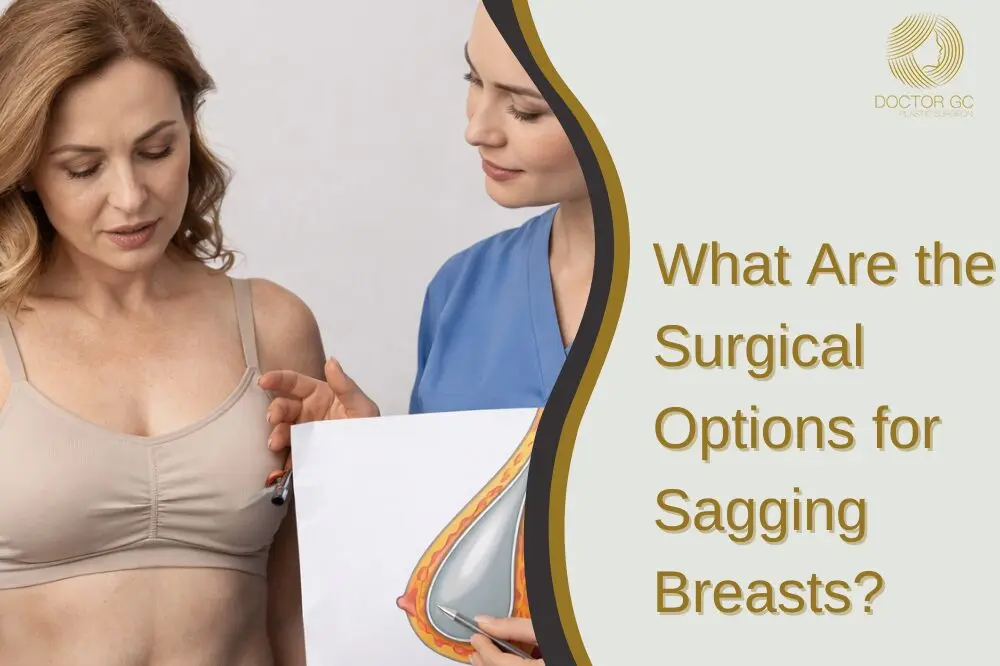
Saggy breasts are a common change that can happen with age, pregnancy, weight fluctuations, and changes in skin elasticity. If you are concerned about a saggy breast, understanding the possible causes can help you choose suitable ways to manage the condition.
Although exercises and healthy lifestyle habits can support overall fitness and skin health, they cannot fully lift sagging breast tissue. For more noticeable changes in breast position, a surgical procedure such as a breast lift may be considered after a consultation with a qualified plastic surgeon.
This article explains the common causes of saggy breasts, what you can do at home, and the medical options available.
What Causes Saggy Breasts?
Breast sagging, medically known as breast ptosis, happens when the skin and supporting tissues change over time. Several factors can contribute to this change.
1. Ageing and Reduced Skin Elasticity
As you age, your skin gradually loses some of its elasticity. The supporting tissues may stretch, changing the shape and position of the breasts.
2. Pregnancy and Breast Changes
During pregnancy, hormonal changes can cause the breasts to become fuller and heavier. After pregnancy, breast volume may change, which can leave the skin and supporting tissues stretched. These changes can happen whether or not a woman breastfeeds.
3. Weight Fluctuations
Repeated or significant weight changes can affect breast volume and skin elasticity. Weight loss may reduce the fat within the breasts, making them appear less full or more droopy.
4. Genetics and Natural Breast Shape
Genetics can influence skin elasticity, breast size, and the strength of supporting tissues. As a result, some women may notice sagging earlier than others.
5. Breast Size and Smoking
Larger, heavier breasts may be more affected by gravity over time. Smoking can also affect skin health and contribute to the loss of elasticity.
Can You Prevent or Improve Saggy Breasts Naturally?
Natural methods may help support skin health, comfort, and overall body fitness. However, they cannot reliably reverse existing breast sagging or reposition the nipples.
1. Exercise for Chest Strength
Push-ups, chest presses, and other strength exercises can strengthen the pectoral muscles beneath the breasts. This may improve the appearance of the chest, but these exercises do not directly tighten breast skin or lift the breast tissue.
2. Wear a Well-Fitting Supportive Bra
A comfortable, properly fitted bra can provide support during daily activities. A suitable sports bra can also reduce breast movement during running or other high-impact exercise. However, wearing a bra should not be considered a proven way to prevent long-term sagging.
3. Maintain a Stable, Healthy Weight
Try to avoid repeated, significant weight changes where possible. Maintaining a weight that is healthy for you can reduce some of the stretching associated with changes in breast volume.
4. Follow a Healthy Skincare Routine
Moisturiser can help keep the skin hydrated, while sun protection and avoiding smoking support overall skin health. However, creams, oils, and breast massage cannot reliably lift sagging breasts.
If the breasts have significant drooping, lifestyle changes alone may not provide the changes you are looking for.
Medical Treatments for Saggy Breasts
The appropriate treatment depends on breast size, skin quality, the position of the nipples, and whether you want to change breast volume. A consultation helps determine which options may be suitable.
1. Breast Lift Surgery (Mastopexy)
A breast lift, also called mastopexy, is a procedure designed to address sagging. It involves removing excess skin and reshaping the breast tissue to improve breast position and contour.
A breast lift may be considered when the breasts have lost firmness, the nipples point downward, or the nipples sit below the natural breast crease.
Like any surgery, a breast lift has potential risks, including scarring, changes in nipple sensation, asymmetry, and healing complications. Results can also change with ageing, pregnancy, and weight fluctuations.
2. Breast Augmentation Surgery
Some women experience sagging along with a loss of breast volume, particularly after pregnancy or weight loss. In these cases, breast augmentation may be discussed if increasing volume is also a goal.
Breast augmentation does not correct significant sagging on its own. Depending on the breast shape and nipple position, a breast lift may be recommended alongside augmentation.
Women considering Breast Augmentation Surgery in Punjabi Bagh should discuss the available options, implant-related considerations, possible risks, and expected recovery with the surgeon before making a decision.
3. Breast Reduction Surgery
Women with large, heavy breasts may experience sagging along with discomfort in the back, neck, or shoulders. Breast reduction removes excess breast tissue and may involve reshaping the breasts and repositioning the nipples.
A surgeon can assess whether breast reduction, a lift, or a combination of techniques is appropriate for the individual patient.
What Should You Consider Before Breast Surgery?
Before choosing a procedure, discuss your expectations and medical history during a consultation. The surgeon may assess breast size, skin quality, nipple position, previous pregnancies, weight changes, and future pregnancy plans.
You should also ask about the possible risks, scars, recovery requirements, and how long the results may last. Breast surgery does not stop the natural effects of ageing or future changes in breast shape.
For guidance about qualifications and available procedures, you can learn more about consulting a Plastic Surgeon in Delhi.
The plastic surgery cost in Delhi can vary depending on the procedure, surgical technique, facility, anaesthesia, and individual treatment needs. An examination and consultation are needed to understand the likely cost for your case.
Frequently Asked Questions About Saggy Breasts
1. Can exercises fix saggy breasts?
No. Exercises can strengthen the chest muscles beneath the breasts, but they cannot directly tighten stretched breast skin or reposition the nipples. They may improve chest muscle tone without correcting breast sagging itself.
2. Can saggy breasts become firm again naturally?
Lifestyle habits can support general skin health and fitness, but they cannot reliably reverse significant sagging. A breast lift may be considered when the goal is to change breast position.
3. Does breastfeeding cause saggy breasts?
Breast changes can happen after pregnancy, whether or not a woman breastfeeds. Pregnancy-related changes in breast size and supporting tissues can contribute to sagging.
4. Which surgery is used to correct saggy breasts?
A breast lift is designed to raise and reshape sagging breasts. Breast augmentation may be added if more volume is desired, while breast reduction may be appropriate for women with large, heavy breasts.
5. Does breast augmentation lift saggy breasts?
Breast augmentation adds volume, but it does not reliably correct significant drooping. A breast lift may be recommended alongside augmentation, depending on breast shape and nipple position.
6. How long does recovery after a breast lift take?
Recovery varies according to the procedure and the individual. Your surgeon will explain when you can return to work, exercise, and daily activities. Follow the post-operative instructions provided for your situation.
7. When should I consult a doctor about breast changes?
Consider a medical assessment if you are concerned about breast shape or sagging. Seek prompt medical advice for sudden changes, a new lump, unusual nipple discharge, or skin changes, rather than assuming these are caused by normal sagging.
Conclusion
Saggy breasts can develop due to ageing, pregnancy-related changes, weight fluctuations, genetics, and changes in skin elasticity. Exercise, a supportive bra, and healthy habits may support overall fitness and comfort, but they cannot fully reverse established sagging.
A breast lift, breast augmentation, or breast reduction may be considered depending on the breast shape, volume, and individual goals. Consulting a qualified plastic surgeon can help you understand the available options, possible risks, recovery, and expected changes before deciding on treatment.