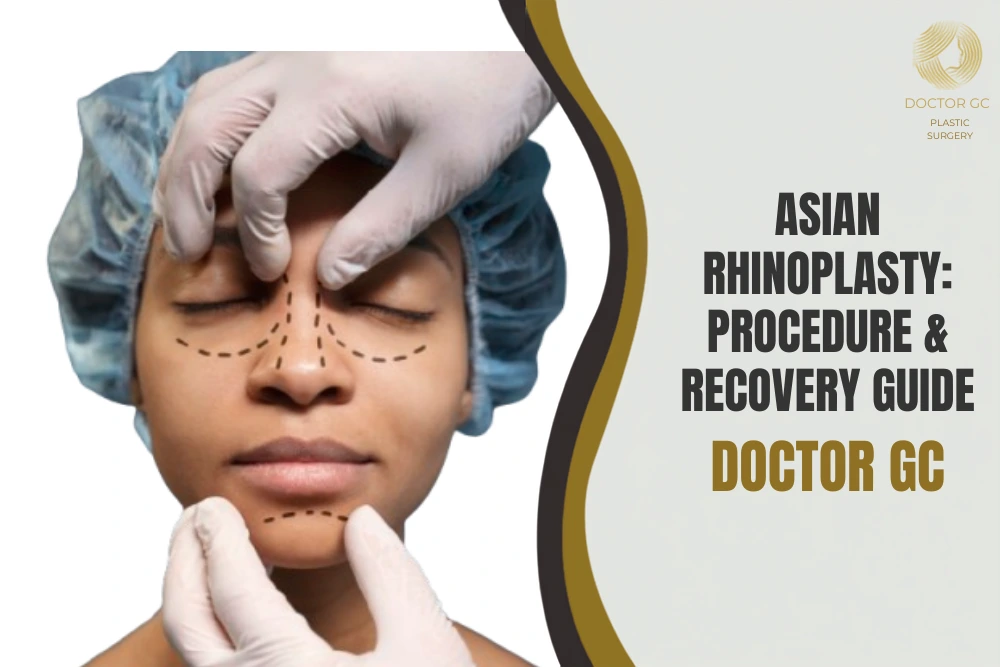
Each individual has different facial features. With reshaping procedures, a universal technique is never appropriate. Asian rhinoplasty works to reshape the nose with the consideration to keep the patient’s ethnic background.
With traditional rhinoplasty techniques having no success with patients’ needs, Asian rhinoplasty works with the structures of the lower nasal bridge, wider nostrils, thicker skin and less defined nasal tips.
Thinking of having Asian Rhinoplasty? Reach out to a skilled Plastic Surgeon in Delhi for results that enhance the beauty of your facial features.
What Is Asian Rhinoplasty?
For the Asian demographic, rhinoplasty is designed to be either a cosmetic or reconstructive surgery. Asian rhinoplasty, in general, is designed to Ethnically Upgrade rhinoplasty, which is to enhance and improve the shape and size and add projection to the nose while retaining the patient’s ethnic identity.
The surgery can address concerns such as:
- Low nasal bridge
- Broad nasal tip
- Wide nostrils
- Flat nose profile
- Lack of tip projection
- Nasal asymmetry
- Breathing difficulties (when combined with functional rhinoplasty)
How Is Asian Rhinoplasty Different from Traditional Rhinoplasty?
For patients of Asian descent, their nose’s structures usually have features such as:
- Lower nasal bridge
- Softer, weaker cartilage
- Thicker skin around the nasal tip
- Wider nostril base
- Less nasal tip definition
To reinforce these structures, Asian Rhinoplasty uses cartilage grafts or implants instead of the usual tissue reduction techniques.
Common Techniques Used in Asian Rhinoplasty
Depending on the goals and needs, multiple techniques may be used.
1. Nasal Bridge Augmentation
A more defined higher nasal bridge is a common request by many of our Asian patients.
This can be accomplished with the use of:
- Septal cartilage
- Ear cartilage
- Rib cartilage
- Implants made of medical grade silicone
- Gore-Tex implants (in certain cases)
2. Tip Projection and Refinement
A less projected and a broader nasal tip is usually the result of weak cartilage.
In this case, surgeons use cartilage grafting to strengthen and reshape the nasal tip and improve:
- Projection
- Definition
- Symmetry
- Support
A result of this technique is a more refined tip, and one that is not overly sharp.
3. Alar Base Reduction
Wider nostrils can give an impression of a broader nose. With a base reduction, we can narrow the width of the nostrils, while keeping the overall proportions of the nose. Incisions are made to ensure that scarring, if any, is minimal.
4. Septoplasty (If Needed)
Some patients have the added concern of a nasally deviated septum. Function and form can be improved with a septoplasty in combination with cosmetic rhinoplasty.
5. Open or Closed Rhinoplasty
Based on how complicated the surgery is, your surgeon will recommend one of the following:
- Greater visibility
- Use for major reshaping
- Greater precision
Closed Rhinoplasty-
- No external scarring
- Reduced swelling
- Faster recovery
- Use for minor reshaping
Your surgeon will recommend the best option in your case, at the time of your appointment.
Benefits of Asian Rhinoplasty
Rhinoplasty has become popular for both aesthetic as well as functional reasons.
1. Better Aesthetics
A nose that is in balance with the rest of the face provides a better proportion without losing a person’s identity.
2. Better Function
The goal of modern techniques is to improve without changing the identity.
People should notice that you look better, but should not be able to tell what you’ve done to improve your appearance.
3. Asian Rhinoplasty
Asian rhinoplasty can help improve:
- Tip projection
- Improved Bridge height
- Enhanced Profile
- More balanced Facial proportions
Who Should Consider Asian Rhinoplasty?
You may be a good candidate if you:
- Are of flat nose bridge
- Have wide nostrils
- Are self-conscious about the shape of your nose.
- Have an honest outlook on possible results.
- Are in good health.
- Have finished growing.
Recovery From Asian Rhinoplasty
Recovery will vary, but will improve gradually with time.
In general:
- You may have some mild swelling and bruising the first week.
- The splint will come off in about 7 days.
- You may be able to go back to work in 1 to 2 weeks.
- Swelling will improve after a few months.
- The results will continue to improve after 12 to 18 months.
- Following your surgeon’s post-op instructions will be important.
Why Choose Rhinoplasty Surgery in Delhi
Delhi is becoming a famous spot in India for new and innovative cosmetic surgery.
Choosing Rhinoplasty Surgery in Delhi has many advantages.
You will have:
- Outstanding surgeons and advanced medical technology.
- Surgery that meets and exceeds international safety standards.
- Tailored treatment plans and thorough after care.
- Affordable surgery compared to many places in the world.
Best Tips For Picking Your Surgeon
Confirm your surgeons:
- Certificates and degrees
- Before and after patient photos
- Inquire whether they’ve worked with Asian rhinoplasty before.
- Ask about methods and what type of grafts they may have used.
- Know the risks and what can be expected.
- Verify that the clinic uses a high level of safety.
Conclusion
Asian Rhinoplasty is a precise and intricate plastic surgery of the nose that combines facial structures and ethnic features. This procedure aims to bring out one’s natural self. Items like identity and self-image are maintained during the surgery.
Desired outcomes can range from improved breathing function to a refined nasal bridge and projection. Each patient receives an individualized treatment based on their characteristics and goals when experienced Plastic Surgeons of Delhi perform Rhinoplasty in Delhi. The outcomes are natural.
The balance and confidence that come with a successful Rhinoplasty can be life-changing for Asian individuals.