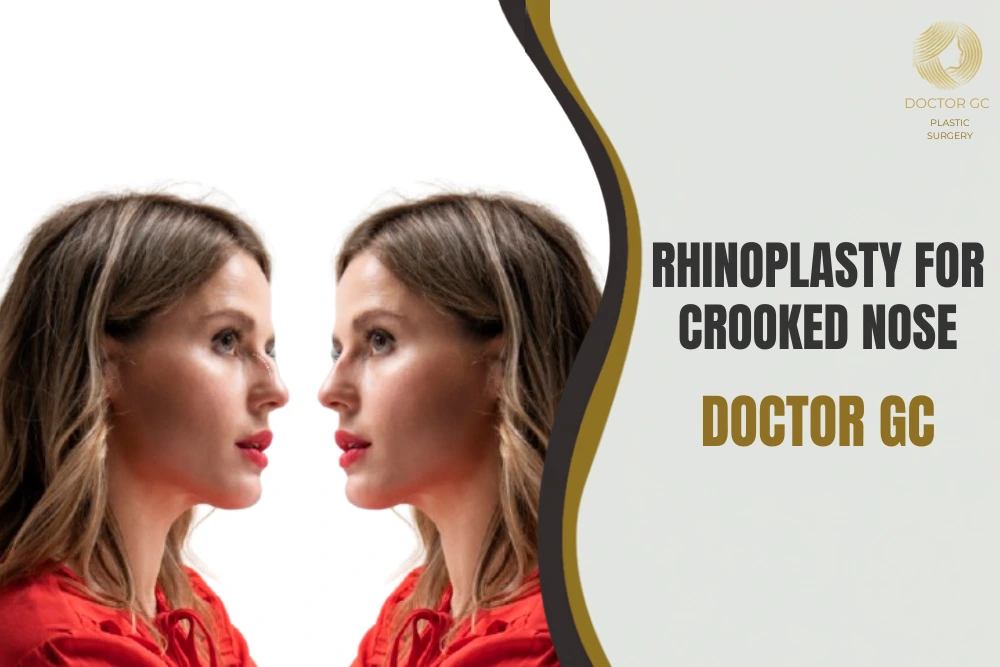
A crooked nose isn’t just a cosmetic concern — for many people, it also means breathing problems, sinus issues, or a face that never quite feels “in sync” in photos. Whether it’s from a childhood injury, an old fracture, or simply how your nose grew, a crooked nose can be corrected with the right surgical approach.
Dr. Gautam Chaudhury, recognized as one of the Best Cosmetic Surgeons in Delhi, specializes in rhinoplasty procedures designed to correct both the appearance and function of a crooked nose — giving patients a nose that looks natural and works the way it should.
What Causes a Crooked Nose?
Before jumping into treatment, it helps to understand why noses turn crooked in the first place. Common causes include:
- Nasal trauma — a sports injury, fall, or accident that shifted the nasal bone or cartilage
- Deviated septum — the wall inside your nose that separates the nostrils grows off-center
- Genetics — some people are simply born with asymmetrical nasal structure
- Previous rhinoplasty — a nose job that didn’t heal evenly or was performed by an inexperienced surgeon
Regardless of the cause, the fix usually comes down to the same thing: a surgeon who understands both the aesthetics and the internal structure of the nose.
Why Crooked Nose Correction Is More Complex Than Standard Rhinoplasty
Not all rhinoplasty is created equal. Straightening a crooked nose is technically more demanding than a routine cosmetic reshaping because the surgeon has to:
- Correct the external asymmetry so the nose looks straight from every angle
- Address the internal septum if it’s contributing to the crookedness
- Preserve or improve breathing function, especially if trauma has affected the nasal passage
- Rebuild structural support using cartilage grafts in more severe cases
This is why choosing an experienced Plastic Surgeon in South Delhi matters so much. Crooked nose correction isn’t a one-size-fits-all procedure — it requires careful pre-surgical planning, often supported by 3D imaging, to map out exactly how the bone and cartilage need to be adjusted.
Crooked Nose Rhinoplasty vs. Standard Cosmetic Rhinoplasty
| Aspect | Crooked Nose Rhinoplasty | Standard Cosmetic Rhinoplasty |
|---|---|---|
| Primary Goal | Correct asymmetry + often improve breathing | Reshape for aesthetic refinement |
| Complexity | Higher — involves bone, cartilage, and septum realignment | Moderate — usually soft tissue and minor structural work |
| Septum Involvement | Frequently requires septoplasty | Rarely necessary |
| Cartilage Grafting | Often needed for structural support | Occasionally used for tip refinement |
| Imaging/Planning | Detailed 3D assessment essential | Standard photographic assessment usually sufficient |
| Functional Benefit | Improved breathing, reduced snoring/sinus issues | Primarily cosmetic, minimal functional change |
| Recovery Time | Similar, 2–3 weeks for visible healing | 2–3 weeks for visible healing |
| Ideal Candidate | Visible nasal deviation, trauma history, breathing difficulty | Patients seeking shape refinement without structural issues |
| Surgeon Expertise Needed | Advanced — structural + aesthetic judgment | Standard rhinoplasty training sufficient |
The Procedure: What to Expect
At Dr. Chaudhury’s clinic, crooked nose rhinoplasty typically follows these steps:
Consultation and assessment — A detailed examination of your nasal structure, breathing function, and facial symmetry, often including photographs and imaging to plan the correction.
Anesthesia — Performed under general or local anesthesia with sedation, depending on the complexity of the case.
Correction technique — Using either an open or closed rhinoplasty approach, the surgeon repositions the nasal bones, straightens the septum (septoplasty, if needed), and may use cartilage grafts to reinforce weak areas and maintain long-term shape.
Recovery — A splint is placed on the nose for about a week to support the new structure while initial healing takes place. Most swelling and bruising fades within two to three weeks, though final results continue refining over several months.
If you’re exploring Rhinoplasty Surgery in Delhi for a crooked nose, it’s worth remembering that results build gradually — patience during the healing phase pays off in the final outcome.
Functional Benefits Beyond Appearance
For many patients, correcting a crooked nose isn’t purely cosmetic. Straightening the septum and nasal passage can noticeably improve:
- Breathing through both nostrils evenly
- Reduced snoring
- Fewer sinus infections
- Better sleep quality
This dual benefit — form and function — is one of the reasons crooked nose rhinoplasty tends to be so satisfying for patients.
Choosing the Right Surgeon Matters
A crooked nose is often the result of asymmetry that’s been there for years, sometimes decades. Correcting it well requires a surgeon who can read the nose in 3D — not just how it looks from the front, but how the internal structure supports that shape.
Dr. Gautam Chaudhury brings this combination of aesthetic judgment and surgical precision to every rhinoplasty case, which is part of why he’s regarded among the Best Cosmetic Surgeons in Delhi for nasal reshaping procedures.
Is Crooked Nose Rhinoplasty Right for You?
You may be a good candidate if:
- Your nose visibly leans to one side
- You have trouble breathing through one or both nostrils
- You’ve had a nasal injury in the past
- A previous rhinoplasty didn’t fully correct your asymmetry
The best way to know for sure is a personal consultation, where imaging and a physical exam can determine exactly what your nose needs.
Conclusion
A crooked nose can affect far more than your reflection — it can shape how confidently you show up in photos, how easily you breathe, and even how well you sleep at night. The good news is that with the right surgical expertise, both the appearance and function of your nose can be restored effectively.
Crooked nose rhinoplasty is a more nuanced procedure than standard cosmetic reshaping, which is exactly why experience matters so much in choosing your surgeon. Dr. Gautam Chaudhury combines precise structural understanding with an aesthetic eye, helping patients achieve a nose that looks natural, stays balanced long-term, and functions the way it should.
If you’ve been living with a crooked nose — whether from injury, genetics, or a previous surgery that didn’t go as planned — know that correction is possible, and it doesn’t have to mean starting from scratch on your confidence. As one of the trusted names among Best Cosmetic Surgeons in Delhi, Dr. Chaudhury offers personalized consultations to assess your unique nasal anatomy and walk you through the best path forward.
Book your consultation today and take the first step toward a nose that finally feels — and looks — like it belongs on your face.
Frequently Asked Questions
1. Is crooked nose correction more painful than regular rhinoplasty?
Not significantly. Discomfort levels are similar to standard rhinoplasty — mild pain, congestion, and swelling for the first few days, managed with prescribed medication.
2. How long do results take to settle?
Initial swelling reduces within 2–3 weeks, but the nose continues refining for 6–12 months as deeper swelling resolves and tissues settle into their final shape.
3. Will insurance cover crooked nose rhinoplasty?
If the procedure addresses a functional issue like a deviated septum or breathing obstruction, it may be partially covered. Purely cosmetic straightening typically isn’t. Your surgeon can clarify what applies to your case.
4. Can a crooked nose come back after surgery?
With proper technique — especially adequate cartilage support — results are generally permanent. Reversion is rare and usually linked to inadequate structural support during the original surgery.
5. Is revision rhinoplasty for a crooked nose harder than the first surgery?
Yes. Revision cases involve scar tissue and altered anatomy, making them more technically demanding. Choosing an experienced Plastic Surgeon in South Delhi for the first procedure reduces the chances of ever needing a revision.
6. What’s the right age to get a crooked nose fixed?
Most surgeons recommend waiting until facial growth is complete, typically around 16–18 years for females and slightly later for males, unless there’s an urgent functional issue.
7. How long is the recovery before I can go back to work?
Most patients return to non-strenuous work within 7–10 days, once the external splint is removed. Full physical activity should wait 4–6 weeks.