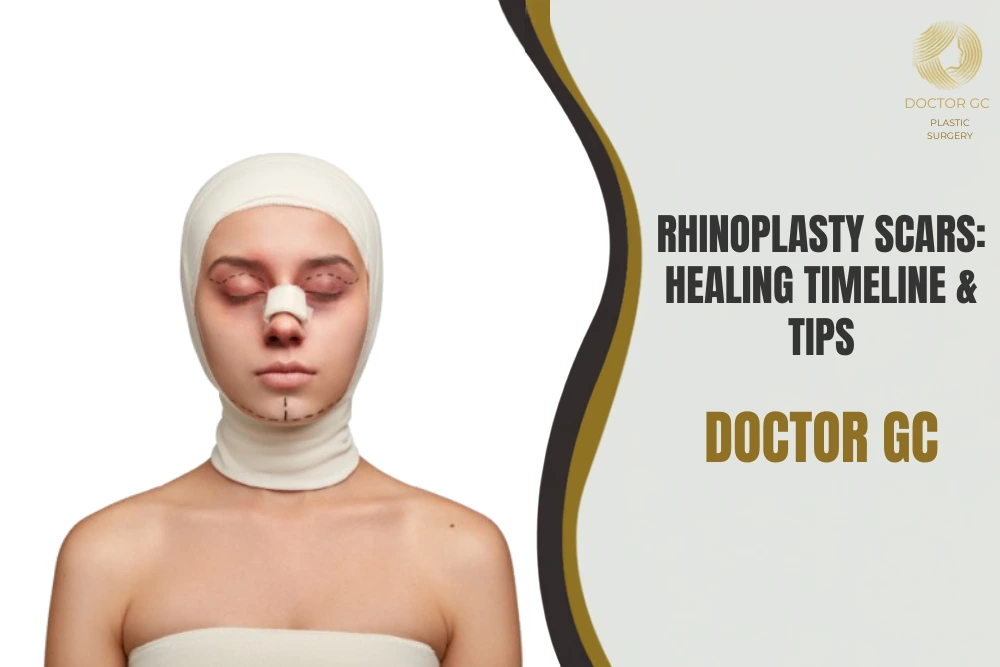
If you’re researching rhinoplasty, chances are “will I have visible scars?” is somewhere near the top of your worry list. It’s a fair question — your nose sits right in the middle of your face, and the idea of a permanent mark there understandably makes people nervous.
Here’s the reassuring truth: in the vast majority of rhinoplasty cases, scarring is either completely hidden or so minimal that even you’ll struggle to spot it a year later. But the details depend heavily on the technique used, your skin type, and how well you follow post-op care. Let’s break it all down.
Why Rhinoplasty Scars Worry Patients So Much
Unlike a scar on your arm or abdomen that you can cover with clothing, a nose scar feels exposed. Patients often picture the worst-case scenario — a visible line across the base of the nose or a shiny patch of skin that changes with every photo. In reality, modern rhinoplasty techniques are designed specifically to minimize this risk, and an experienced surgeon plans incisions with scarring in mind from the very first consultation.
Closed vs Open Rhinoplasty: How Technique Affects Scarring
The scarring outcome depends largely on which surgical approach is used.
Closed rhinoplasty involves incisions made entirely inside the nostrils. Because every cut is hidden within the nasal passages, there is no external, visible scarring at all. This technique is often preferred for moderate reshaping work where the surgeon doesn’t need extensive access to the nasal structure.
Open rhinoplasty requires one small additional incision across the columella — the thin strip of skin separating the nostrils. This approach gives the surgeon a fuller view of the nasal framework, which is often necessary for complex reshaping, revision cases, or significant structural correction. The columellar incision is tiny, typically just a few millimeters, and is placed in a natural skin crease so it heals into a fine, thread-like line that fades significantly over time.
| Factor | Closed Rhinoplasty | Open Rhinoplasty |
|---|---|---|
| Incision location | Inside the nostrils | Small cut across the columella |
| Visible scar | None | Faint line, usually fades within 6-12 months |
| Best suited for | Moderate reshaping | Complex or revision cases |
| Surgical visibility | Limited | Full view of nasal structure |
| Healing time for scar to fade | N/A | 6-12 months typically |
The Healing Timeline: What to Expect Week by Week
Scar healing isn’t instant — it’s a gradual process, and knowing what’s normal at each stage helps you avoid unnecessary worry.
- Weeks 1-2: Any incision (if open technique was used) appears red or pink and slightly raised. Swelling in the surrounding area is at its peak during this window.
- Weeks 3-6: The scar begins to flatten and lighten. Most of the visible swelling around the nose subsides.
- Months 2-6: Collagen remodeling continues under the surface. The scar softens further and starts blending with surrounding skin tone.
- Months 6-12: For most patients, the scar has faded to a barely-visible line. Final results, including scar maturity, are typically assessed around the one-year mark.
Factors That Influence How Your Scar Heals
Several variables affect the final appearance of a rhinoplasty scar, and understanding them helps set realistic expectations:
Skin type and tone — Thicker or oilier skin sometimes takes slightly longer to show final scar results, while very thin skin shows underlying structure more quickly but scars can also be more delicate.
Genetics — Some people are simply more prone to raised or pigmented scarring (such as keloid tendency), regardless of surgical technique.
Surgeon’s incision placement and technique — Precise, tension-free closure by an experienced plastic surgeon significantly reduces the chances of a noticeable scar.
Post-operative care — Sun protection, avoiding unnecessary touching or picking, and following your surgeon’s wound care instructions all directly affect the final result.
Smoking and nutrition — Smoking restricts blood flow to healing tissue and can slow or worsen scar formation. A protein-rich, nutrient-dense diet supports faster tissue repair.
Tips to Minimize Rhinoplasty Scarring
- Protect the area from sun exposure. UV rays can darken healing scar tissue, making it more noticeable. Use a broad-spectrum sunscreen once your surgeon clears you to do so, and consider a hat when outdoors.
- Avoid touching or picking at the incision site. This increases infection risk and can disrupt the natural healing process.
- Follow the prescribed wound care routine. This may include gentle cleaning, ointments, or silicone-based scar treatments recommended by your surgeon.
- Don’t rush back into intense physical activity. Sweating and increased blood pressure to the face can affect healing in the early weeks.
- Stay consistent with follow-up visits. Your surgeon can catch early signs of poor healing and intervene before it becomes a lasting concern.
- Be patient. Scar tissue continues to remodel for up to a year — early redness or firmness is not the final outcome.
When to Be Concerned About a Scar?
While most rhinoplasty scars heal beautifully, watch for these signs and reach out to your surgeon if you notice:
- Increasing redness, warmth, or swelling after the first two weeks (possible infection)
- A scar that keeps thickening or raising rather than flattening over time
- Persistent pain or discharge from the incision site
- Significant asymmetry developing at the incision as it heals
Most of these concerns are manageable when caught early, which is why follow-up appointments matter as much as the surgery itself.
Why Choosing the Right Surgeon Matters for Scarring?
Scar outcomes aren’t just about biology — surgical skill plays a major role. A surgeon who plans incision placement carefully, uses precise suturing techniques, and closes the wound with minimal tension gives your skin the best possible foundation for healing. This is one of the many reasons the choice of your Plastic Surgeon in Delhi matters as much as the technique itself.
If you’re exploring your options and want to understand the full procedure in detail, from technique selection to recovery, it helps to first understand what the Rhinoplasty Surgery in Delhi process actually involves at a reputable clinic. And since budget planning is usually part of the decision-making process, many patients also look into Rhinoplasty Surgery cost in Delhi before booking a consultation.
Frequently Asked Questions
1. Will my rhinoplasty scar be visible in photos?
For closed rhinoplasty, there is no external scar at all, so it won’t show in any photo. For open rhinoplasty, the columellar scar is extremely small and typically fades to a fine line that’s very difficult to notice within a year, even in close-up photos.
2. How long does it take for a rhinoplasty scar to fully fade?
Most patients see significant fading within 6 months, with the scar reaching its final, matured appearance around the 12-month mark.
3. Can I use scar creams or silicone strips after rhinoplasty?
Yes, many surgeons recommend silicone-based scar gels or sheets once the incision has closed, as they can help soften and flatten healing tissue. Always confirm timing and product choice with your surgeon first.
4. Does open rhinoplasty always leave a visible scar?
It leaves a very small incision line, but “visible” is relative — most people won’t notice it unless they’re specifically looking for it, especially after the healing process completes.
5. Are some people more prone to bad scarring after rhinoplasty?
Yes. Genetics, skin type, and a personal or family history of keloid or hypertrophic scarring can make a difference. Discuss your scarring history with your surgeon during consultation so they can plan accordingly.
6. Does revision rhinoplasty carry a higher scarring risk?
Revision cases often require the open technique due to the complexity involved, but the incision itself is placed in the same natural crease, so the scarring risk isn’t dramatically different from a first-time open rhinoplasty.
Final Thoughts
Scarring is one of the most common rhinoplasty concerns, but it’s also one of the most manageable — provided you choose an experienced surgeon and follow post-operative care closely. Whether you’re a candidate for closed or open rhinoplasty, understanding what to expect at each healing stage helps you approach the procedure with confidence rather than anxiety.
About the Author
Dr. Gautam Chaudhury is a Delhi-based plastic surgeon holding MBBS, MS (General Surgery), and M.Ch (Plastic Surgery) qualifications, and is a member of the IAAPS (Indian Association of Aesthetic Plastic Surgeons). With extensive experience in rhinoplasty and facial reconstructive procedures, Dr. Chaudhury is known for a precision-focused, patient-centered approach to cosmetic surgery.