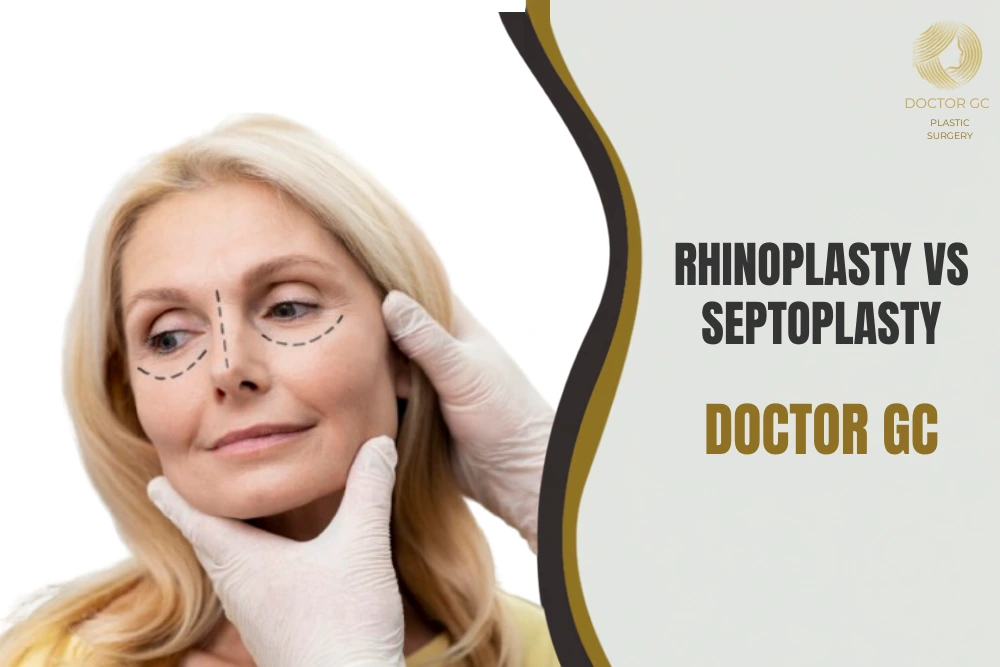
If you’ve been researching nose surgery, you’ve probably run into both terms — rhinoplasty and septoplasty — sometimes used almost interchangeably. They’re not the same procedure, and knowing the difference matters, because it changes what your surgery can and can’t achieve, whether insurance is likely to cover any part of it, and what kind of specialist you should be consulting.
This guide breaks down exactly how rhinoplasty and septoplasty differ, who typically needs each one, and what to expect if you’re considering either — or both — in Delhi.
What Is Rhinoplasty?
Rhinoplasty, commonly called a nose job, reshapes the external appearance of the nose. It can adjust the size, bridge, tip, or overall symmetry of the nose to improve facial balance. Most people seeking rhinoplasty are focused on cosmetic outcomes — correcting a hump, refining a bulbous tip, or narrowing a wide bridge — though rhinoplasty can also be combined with functional corrections when needed.
For a full breakdown of surgical types, recovery timelines, and what results are realistic, see our detailed guide to Rhinoplasty Surgery in Delhi.
What Is Septoplasty?
Septoplasty is a functional procedure that corrects a deviated septum — the thin wall of cartilage and bone that separates the two nostrils. When this septum is significantly off-center, it can restrict airflow, cause chronic congestion, snoring, or difficulty breathing through one or both nostrils. Septoplasty straightens this internal structure to restore normal airflow.
Unlike rhinoplasty, septoplasty is not designed to change how the nose looks from the outside. Its goal is purely functional: better breathing.
Rhinoplasty vs Septoplasty: Quick Comparison
| Factor | Rhinoplasty | Septoplasty |
|---|---|---|
| Primary Goal | Reshape external appearance | Correct internal breathing obstruction |
| Common Reason | Cosmetic concerns, facial balance | Deviated septum, chronic congestion |
| Visible Change | Yes — nose shape and size may change | No — external nose appearance stays the same |
| Insurance Coverage | Rarely covered (cosmetic) | Often partially covered (medical necessity) |
| Recovery Time | 1–2 weeks for social recovery; up to a year for final shape | Typically 1–2 weeks |
| Can Be Combined? | Yes — with septoplasty (septorhinoplasty) | Yes — with rhinoplasty |
Can You Get Both at the Same Time?
Yes — this is actually quite common and is called septorhinoplasty. If you have both a cosmetic concern (like a dorsal hump or wide bridge) and a functional issue (like a deviated septum causing breathing trouble), your surgeon can often address both in a single operation. This avoids putting your nose through two separate recovery periods and is generally more cost-effective than two standalone procedures.
During consultation, a qualified Plastic Surgeon in Delhi will evaluate both the external structure and internal airway before recommending whether you need rhinoplasty alone, septoplasty alone, or a combined approach.
How Do You Know Which One You Need?
A few questions can help point you in the right direction before your consultation:
- Are you unhappy with how your nose looks, but breathe fine? You likely need rhinoplasty alone.
- Do you breathe well through your nostrils individually, but wish for cosmetic changes? Rhinoplasty is your focus.
- Do you struggle to breathe through one or both nostrils, snore heavily, or get frequent sinus infections, with no concerns about appearance? Septoplasty alone may be appropriate.
- Do you have both a shape concern and a breathing issue? Septorhinoplasty may be the right combined approach.
That said, only a physical examination — often including a nasal endoscopy — can confirm whether a deviated septum is actually present and how severe it is. Self-diagnosis based on symptoms alone isn’t reliable.
Recovery: How They Compare
Both procedures involve similar early recovery milestones — swelling, mild bruising, and a splint for the first week. Where they diverge is in the long tail of recovery:
- Septoplasty recovery is largely complete once internal swelling resolves, typically within a couple of weeks. Since there’s no external reshaping, there’s no “final result” to wait months for.
- Rhinoplasty recovery has two timelines running in parallel — a faster social recovery (looking presentable within 1–2 weeks) and a much slower structural settling process, where subtle changes in tip definition and contour continue to refine for up to a year.
If your procedure is a combined septorhinoplasty, expect the rhinoplasty timeline to apply overall, since the external healing process takes longer than the internal one.
Why Choosing the Right Surgeon Matters for Either Procedure
Because septoplasty and rhinoplasty both involve delicate work on the same structure — bone, cartilage, and the tissue between them — a surgeon who only focuses on one side (purely cosmetic, or purely functional) may not be equipped to handle cases where both are involved. This is particularly relevant if you’re exploring options with a Best Plastic Surgeon in South Delhi, since a combined evaluation of both form and function upfront can save you from needing a second, separate procedure later.
Look for a board-certified plastic surgeon with specific experience in both cosmetic and functional nasal surgery, so that whichever combination you need, it can be addressed with one coordinated surgical plan rather than a fragmented one.
Frequently Asked Questions
Q. Is septoplasty covered by insurance while rhinoplasty isn’t?
Often, yes. Since septoplasty addresses a functional medical issue — breathing difficulty from a deviated septum — many insurance plans partially cover it when medical necessity is documented. Rhinoplasty performed purely for cosmetic reasons is typically not covered, though if it’s combined with septoplasty, some plans may partially cover the functional portion.
Q. Will septoplasty change how my nose looks?
No. Septoplasty works on the internal septum only and is not intended to alter the external shape, size, or profile of your nose. If you want both a cosmetic change and a breathing correction, ask your surgeon about combined septorhinoplasty.
Q. Can a deviated septum get worse if I don’t treat it?
A deviated septum doesn’t typically worsen on its own once you’re past adolescence, but the symptoms it causes — chronic congestion, snoring, or recurring sinus infections — can persist or become more bothersome over time if left untreated.
Q. How do I know if my septum is actually deviated, or if it’s just seasonal congestion?
Seasonal or allergy-related congestion tends to come and go and usually affects both nostrils somewhat evenly. A deviated septum often causes a more one-sided, persistent obstruction that doesn’t resolve with decongestants or allergy treatment. A physical examination is the only reliable way to confirm this.
Q. Does combining rhinoplasty and septoplasty increase recovery time?
Not significantly. Since both procedures work on the same general area, combining them usually doesn’t add meaningful extra downtime compared to rhinoplasty alone — you’re addressing two concerns in the recovery window you’d already need for the cosmetic portion.
About Dr. Gautam Chaudhury
Dr. Gautam Chaudhury is a board-certified plastic surgeon (MBBS, MS, M.Ch in Plastic Surgery) with over 16 years of experience in cosmetic and reconstructive procedures, including both functional and cosmetic nasal surgery. Patients considering rhinoplasty, septoplasty, or a combined approach can book a consultation to get a personalized evaluation of both form and function before deciding on a surgical plan.